
India-EU FTA: What Changes for Trade, Cars, Food and Services
The India-EU Free Trade Agreement could significantly reshape bilateral commerce once ratified, with India set to lower tariffs on most EU goods while Indian exporters gain wider access to the European market.
India-EU FTA: What Changes for Trade, Cars, Food and Services
India and the European Union are moving toward a major overhaul of their trade relationship after concluding negotiations on a long-awaited Free Trade Agreement (FTA). The pact is designed to reduce tariffs, expand market access and make it easier for companies on both sides to trade and invest.
However, the agreement is not yet in force. Negotiations were concluded on January 27, 2026, and the pact must still go through legal review and the required internal procedures before its provisions become binding.
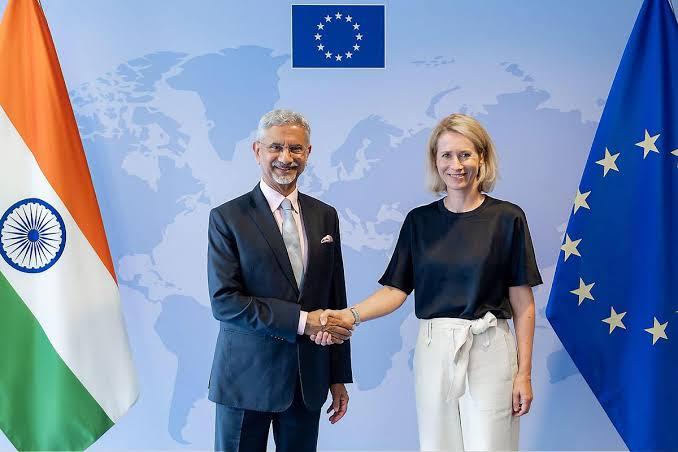
External Affairs Minister S. Jaishankar highlighted the potential of the agreement during a meeting with Luxembourg’s Deputy Prime Minister and Foreign Minister Xavier Bettel in New Delhi, thanking Luxembourg for its strong backing of the trade deal.
India to remove or reduce tariffs on most EU goods
One of the biggest changes under the agreement will be the treatment of imported European products.
According to the European Commission's 2026 FTA factsheet, India will eliminate or reduce tariffs covering 96.6% of EU goods exports. The Commission estimates that European exporters could eventually save as much as €4 billion annually in duties, while EU goods exports to India could potentially double.
These are projections linked to the agreement and should not be interpreted as savings already being realised.
Machinery, electronics and industrial equipment
Machinery and electrical equipment are among the major categories expected to benefit.
EU exports of machinery and electrical equipment to India were worth approximately €16.3 billion in 2024. Some products currently face Indian tariffs as high as 44%.
Under the FTA, tariffs on almost all products in this category are expected to eventually reach zero. However, the reduction will not happen universally overnight. Depending on the product, implementation could stretch over five to 10 years.
This phased approach is intended to give domestic industries time to adjust while gradually opening India's market to European manufacturers.
Aircraft and spacecraft
The aerospace sector will also receive improved access.
EU exports of aircraft and spacecraft to India totalled around €6.4 billion in 2024, with some existing tariffs reaching 11%.
The agreement provides for tariffs to eventually fall to zero on almost all products in the category, with reductions phased in over a period of up to 10 years.
Medical equipment, chemicals and pharmaceuticals
Medical and optical equipment is another important area. EU exports of these products to India were valued at around €3.4 billion in 2024, while tariffs on some products currently reach 27.5%.
Under the agreement, tariffs on around 90% of products in the category are expected to reach zero, either immediately or through five- or seven-year transition periods.
European chemical and pharmaceutical exporters are also positioned to gain. Chemical exports stood at about €3.2 billion in 2024, with tariffs on certain products reaching 22%. Pharmaceutical exports were worth around €1.1 billion, while current tariffs can reach 11%.
Most tariffs in both sectors are expected to eventually reach zero, with several reductions taking effect once the agreement enters into force.
European carmakers face a different arrangement
Automobiles will not receive the same treatment as many industrial products.
India currently imposes tariffs of as much as 110% on imported vehicles. Under the FTA, the rate will be reduced to 10%, but the lower tariff will apply within a quota of 250,000 vehicles.
The provision could make European cars more competitive in India while still limiting the volume eligible for the preferential tariff.
Wine, spirits and European food products
Agriculture and food remain particularly sensitive areas in India-EU trade.
Average Indian tariffs on EU agri-food products exceed 36%, according to the European Commission. The agreement reduces duties on several products but maintains protections for sensitive agricultural categories.
Wine is among the products receiving tariff relief. Duties that can currently reach 150% will decline to between 20% and 30%, depending on the product and price category.
For spirits, tariffs of up to 150% will fall to 40%, while beer duties could decline from as much as 110% to 50%.
Olive oil is another notable change. Tariffs currently reaching 45% are scheduled to eventually fall to zero.
Fruit juices, non-alcoholic beer and various processed food products will also receive tariff reductions under the agreed transition arrangements.
Despite the concessions, India will retain protections for sensitive agricultural products. Imported food will also continue to be subject to applicable Indian standards and regulatory requirements.
Services and investment also feature in the agreement
The FTA is not limited to physical goods.
EU-India services trade reached approximately €67 billion in 2024, with EU services exports accounting for about €29 billion.
The agreement provides preferential market access in selected services sectors, including financial services and maritime transport. It also contains provisions involving senior management, boards of directors and local business presence.
For European companies operating in India, these commitments are intended to provide greater clarity and predictability.
The agreement also covers areas such as digital trade, intellectual property, competition, small and medium-sized businesses and customs procedures.
What India gets from the deal
For India, one of the central advantages is improved access to the European market.
The European Commission estimates that the combined India-EU market represents roughly two billion people and close to one-quarter of global GDP.
The relationship is already significant. India-EU goods trade reached around €118 billion in 2025, with the EU accounting for 11.1% of India's overall goods trade. European companies also held approximately €132.8 billion in FDI stock in India in 2024, while about 6,000 European companies were present in the Indian market.
The FTA could therefore deepen an already substantial commercial relationship rather than create one from scratch.
Lower tariffs will not remove all trade barriers
The agreement does not mean companies will automatically gain access simply because a tariff has been reduced.
Businesses will still need to satisfy regulatory requirements and meet the agreement's rules of origin to qualify for preferential treatment.
A bilateral safeguard mechanism is also included. This could allow temporary protective measures if a sharp rise in preferential imports causes, or threatens to cause, serious injury to domestic industries.
The eventual impact is therefore likely to vary considerably between sectors.
Machinery, chemicals, pharmaceuticals and medical equipment are positioned for significant tariff reductions. Cars will operate under a quota, while agriculture and other sensitive sectors will retain additional protections and longer transition periods.
For European exporters, the agreement promises wider access to one of the world's largest markets. For Indian businesses, the bigger opportunity lies in gaining more favourable access to Europe. But the full economic impact will only become clear after the FTA completes ratification and begins operating.
Tags
More Stories

Peskov Says 90% of Russia-BRICS Transactions Use National Currencies
8 Sept 2026

US Leads Global Finance Jobs as London and Hong Kong Hold Key Niches
8 Sept 2026

Toronto Homeowners Face Heavy Losses as Property Prices Reverse
8 Sept 2026

Falkland Islands dispute explained: Why the UK and Argentina are still fighting over the islands
8 Sept 2026