
Philippines Looks to India and ISRO to Build Its Space Capabilities
The Philippines is expanding its space programme and could deepen cooperation with India and ISRO on satellites, space technology and launch capabilities as Manila develops an indigenous ecosystem.
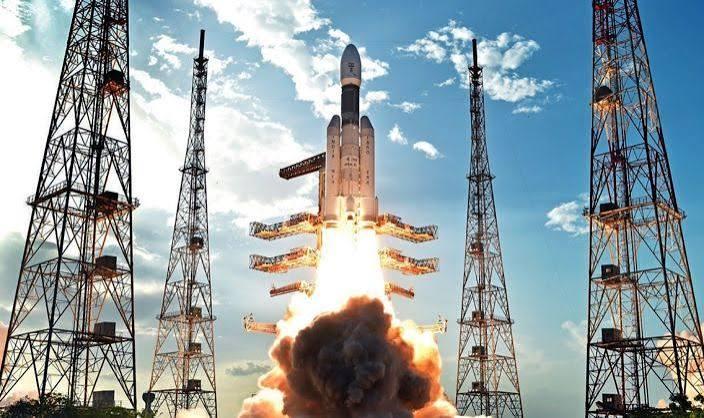
Philippines Looks to India and ISRO to Build Its Space Capabilities
The Philippines is accelerating efforts to build a domestic space industry and is looking to international partnerships, including with India, to strengthen its capabilities in satellites, space technology and launch systems.
The Philippine Space Agency (PhilSA) and the Indian Space Research Organisation (ISRO) already have a formal framework for cooperation. During President Ferdinand Marcos Jr.'s state visit to India in August 2025, the two countries signed a Statement of Intent covering cooperation on the peaceful uses of outer space. The agreement is part of a broader India-Philippines strategic partnership that includes science and technology cooperation.
The relationship could become increasingly relevant as Manila expands the use of satellite technology for agriculture, disaster management, maritime monitoring, climate-related applications and national security.
Philippines Builds a Domestic Space Programme
The Philippines created PhilSA in 2019 as the country's central government agency for space activities. The agency is now moving beyond satellite data use toward developing domestic technical capabilities and infrastructure.
One of its major projects is the Multispectral Unit for Land Assessment, or MULA, which PhilSA describes as the country's most advanced satellite to date. The satellite is designed to provide data for agriculture, maritime monitoring, disaster risk reduction and national security. A possible launch is targeted for April 2027.
The Philippines is also seeking to expand the use of satellite-derived information among government agencies and other organisations. For a country frequently affected by typhoons, flooding and other natural disasters, Earth-observation capabilities can play an important role in monitoring weather events, assessing damage and improving emergency response.
Cagayan Spaceport Plan Adds a New Dimension
The country's ambitions extend beyond operating satellites.
President Marcos has announced plans for a rocket launch test in Cagayan in 2027, describing the province as a potential gateway to space and the location of the country's first spaceport. PhilSA says the test will involve a liquid-fuelled sounding rocket carrying a locally developed payload.
The project is being developed with Philippine government agencies, local partners and South Korea's Perigee Aerospace. A memorandum signed in March 2026 established cooperation on rocket development training and experimental launches.
PhilSA says Cagayan's location near the equator and its access to the Pacific Ocean could provide advantages for future launch and recovery operations.
The planned test is therefore more than a single rocket demonstration. It is intended to help establish technical expertise, safety procedures and regulatory frameworks needed for a future Philippine spaceport.
Why India Is an Attractive Partner
India offers the Philippines experience across several parts of the space sector, from satellite development and launch systems to Earth observation and space applications.
ISRO has developed a broad range of launch vehicles and satellites over decades, while India's space reforms have also opened the sector to private companies.
That combination could be valuable to countries such as the Philippines that are trying to build their own capabilities without having to establish every technology and institution from scratch.
India's space programme has also developed practical applications in areas directly relevant to the Philippines, including remote sensing, communications, navigation, weather monitoring and disaster management.
The existing Statement of Intent between PhilSA and ISRO provides a formal basis for cooperation in the peaceful uses of outer space.
India's Private Space Sector Is Expanding
India's attractiveness as a potential technology partner has increased with the rapid development of its private space industry.
Government reforms introduced in 2020 opened more opportunities for private companies to participate in space activities. The ecosystem has since expanded into launch vehicles, satellites, propulsion, Earth observation and space-based data services.
A major milestone came in July 2026 when Hyderabad-based Skyroot Aerospace successfully conducted India's first private orbital launch from Indian soil. Its Vikram-I rocket lifted off from the Satish Dhawan Space Centre and deployed two satellites into low Earth orbit. ISRO described the mission as the first successful orbital launch from India by a private company.
The development demonstrates how India's space capabilities are increasingly spread across both government institutions and private companies.
For the Philippines, that could create opportunities for commercial partnerships in addition to government-to-government cooperation.
Satellites Could Deliver Immediate Benefits
The most immediate area for cooperation is likely to be satellite applications rather than independent rocket launches.
Earth-observation satellites can help governments monitor agricultural land, coastal areas, forests and infrastructure. Satellite imagery can also support disaster response by providing rapid information after typhoons, earthquakes, floods and landslides.
PhilSA's MULA programme reflects this approach, with applications spanning agriculture, maritime monitoring, disaster management and national security.
India has extensive experience in using space-based systems for similar development and public-service applications, making knowledge exchange and capacity building potentially valuable for Philippine agencies and researchers.
Space Cooperation Fits Wider India-Philippines Ties
The space relationship is part of a broader expansion in bilateral ties.
India and the Philippines elevated their relationship to a Strategic Partnership in 2025, with cooperation covering science and technology, defence, maritime security, digital technologies, agriculture and space. The two governments specifically agreed to promote peaceful uses of outer space and encourage participation by academia, research institutions and industry.
The partnership has become more relevant as both countries seek greater resilience in critical technologies and infrastructure.
For Manila, stronger space capabilities can improve national resilience and reduce dependence on foreign satellite services. For New Delhi, deeper cooperation with the Philippines can strengthen India's technological and diplomatic engagement in Southeast Asia.
The Philippines Is Also Working With Other Space Powers
India is not the Philippines' only international partner.
PhilSA signed a joint declaration with Japan's JAXA in May 2026 covering potential cooperation in satellite missions and data applications, space exploration and human spaceflight, and space sustainability.
The Philippines is also working with South Korea on rocket development and testing, while its broader ASEAN engagement seeks stronger regional cooperation in space science, technology and innovation.
This suggests Manila is pursuing a diversified strategy rather than relying on a single foreign partner.
Key Takeaways
- India and the Philippines already have a space cooperation framework: PhilSA and ISRO signed a Statement of Intent on the peaceful uses of outer space in 2025.
- The Philippines is developing its own satellites: The MULA programme is focused on agriculture, maritime monitoring, disaster management and national security.
- A Philippine spaceport is being explored: Cagayan is preparing for a liquid-fuelled sounding rocket test in 2027.
- India's private sector adds another opportunity: Companies such as Skyroot are expanding India's commercial launch capabilities.
- Satellite applications could be the fastest area of cooperation: Earth observation and disaster monitoring have immediate relevance for the Philippines.
- Manila is pursuing multiple partnerships: Japan, South Korea and other international partners are also involved in the country's emerging space ecosystem.
Why This Matters
The Philippines is moving from being primarily a user of space-based services toward becoming a country capable of developing and operating more of its own space infrastructure.
India could be an important partner in that transition because it combines decades of government-led space expertise with a rapidly expanding private sector. The existing ISRO-PhilSA agreement gives both sides a formal foundation for deeper cooperation, while India's experience in satellites, Earth observation and launch systems could support Philippine capacity building.
For India, the partnership also has strategic significance. Stronger space cooperation with Manila fits into India's wider engagement with Southeast Asia and its effort to expand technology partnerships across the Indo-Pacific.
The Philippines is unlikely to replicate India's space programme overnight. But with domestic satellite projects, a planned rocket test and an emerging spaceport programme, Manila is building the foundations of a more independent space sector—and India is positioned to become one of its important technology and knowledge partners.
More Stories

Russian Drone Strike Hits Indian Pharma Plant in Ukraine Again, One Killed
5 Oct 2026

Trump Rolls Out Grand Welcome for Xi Jinping as US-China Talks Face Tensions Over Trade, Taiwan and Iran
23 Sept 2026

Sri Lanka Easter Bombings Verdict: Court Set to Rule on 24 Accused in 2019 Attacks
22 Sept 2026
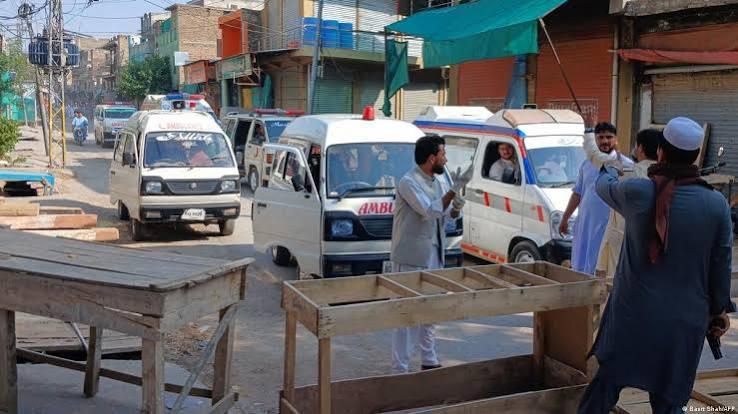
Pakistan Mosque Blast: 21 Killed, 15 Police Officers Among Victims in Kohat Suicide Attack
18 Sept 2026