
West Bengal ‘Practically Bankrupt’? Adhikari Says Recovery Will Take at Least 1 Year; Here’s What the Numbers Show
West Bengal is under significant fiscal pressure, with a large debt stock, rising interest costs and substantial welfare commitments. But while Chief Minister Suvendu Adhikari has described the state as “practically bankrupt”, its budget figures do not indicate literal bankruptcy.
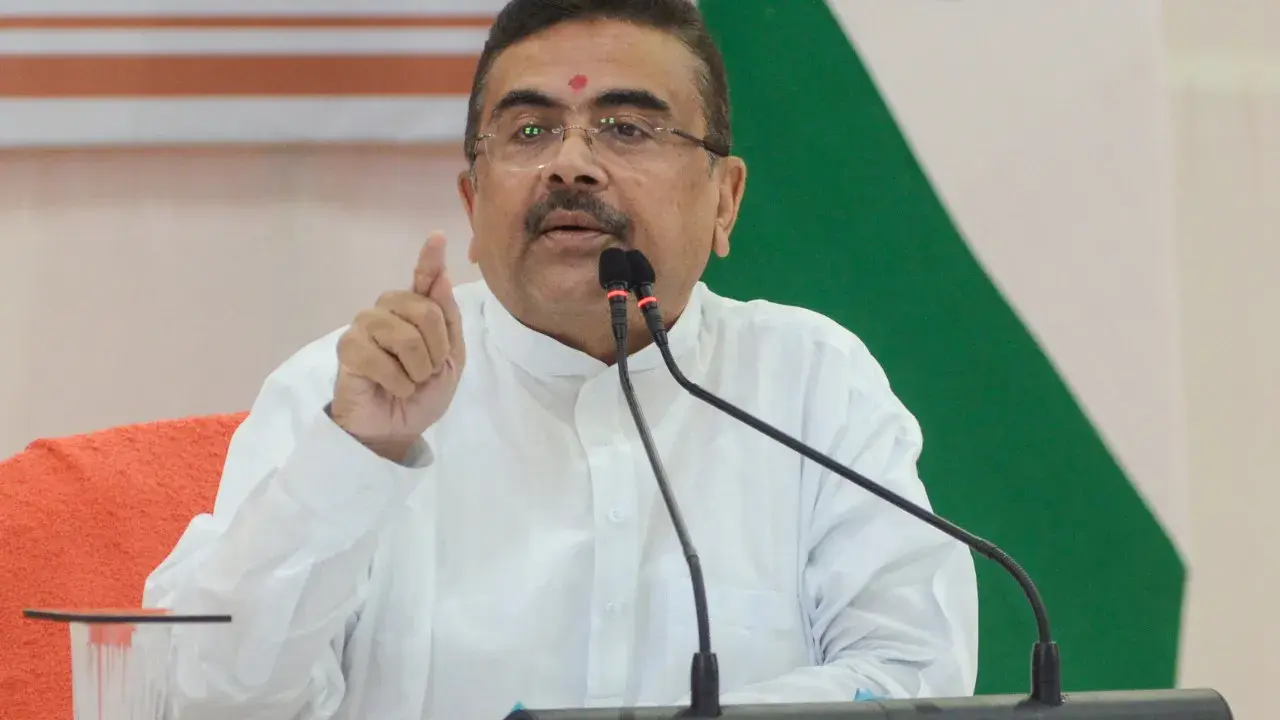
West Bengal ‘Practically Bankrupt’? Debt, Deficit and Revenue Numbers Explained
West Bengal’s finances have come under renewed scrutiny after Chief Minister Suvendu Adhikari described the state as “practically bankrupt”, blaming years of fiscal mismanagement for the financial strain.
The political description highlights a genuine concern: West Bengal has a large outstanding debt burden, substantial recurring expenditure and a sizeable interest bill. At the same time, the state continues to collect taxes, receive funds from the Centre, borrow from the market and finance public expenditure.
That distinction matters. “Bankruptcy” is not a technical fiscal classification for a state government in the same way it is for a company. The more useful way to assess Bengal’s financial health is to examine its debt-to-GSDP ratio, fiscal deficit, revenue deficit, interest payments, revenue collection and ability to fund productive expenditure.
And those numbers show a state facing considerable financial constraints, but not one that has stopped functioning financially.
What does West Bengal’s 2026-27 budget show?
According to the analysis of West Bengal’s 2026-27 Budget by PRS Legislative Research, the state expects its economy to reach about ₹21.48 lakh crore at current prices during 2026-27, representing projected nominal growth of 8%.
The state has targeted a fiscal deficit of ₹62,421 crore, equivalent to 2.9% of GSDP. That is significant, but it is below the 3% fiscal-deficit limit recommended for states by the 16th Finance Commission for 2026-31.
The target is also an improvement over the revised fiscal deficit estimate of 3.4% of GSDP for 2025-26.
West Bengal has additionally budgeted for a revenue deficit of ₹21,984 crore, or 1% of GSDP. This is considerably lower than the revised 2.1% revenue deficit projected for 2025-26.
So, on paper, the state's deficit indicators are moving in the right direction.
The bigger concern is the debt burden
The most significant long-term challenge remains West Bengal’s accumulated liabilities.
The CAG’s State Finances Audit Report for the year ended March 2025 is the latest major audit assessment of the state’s finances. The report examines Bengal’s fiscal position, including its deficits, debt profile and public-account transactions.
The state's outstanding liabilities were around ₹7.02 lakh crore at the end of March 2025, according to the figures cited in the financial analysis.
However, looking only at the absolute debt figure can be misleading. The size of the state's economy also matters.
West Bengal’s debt-to-GSDP ratio has been coming down from its pandemic-era levels. PRS estimates outstanding liabilities at about 38% of GSDP by the end of 2026-27, compared with a revised 38.3% in 2025-26.
That means the debt burden remains high, but it is not currently showing an uncontrolled upward trajectory relative to the size of the economy.
Interest payments are eating into government resources
The problem becomes clearer when looking at how much of the state’s regular income is already committed.
West Bengal has budgeted around ₹53,034 crore for interest payments in 2026-27. It has also provided about ₹54,607 crore for repayment of debt.
Salaries, pensions and interest payments together are estimated at around ₹1.62 lakh crore in the 2026-27 budget.
This limits the amount of money available for infrastructure, public services and other discretionary spending.
The distinction between debt repayment and interest is important. Interest payments are a recurring expense that does not create a new asset, while repayment reduces outstanding liabilities. A government facing a large interest bill therefore has less flexibility every year even before considering new spending commitments.
Revenue collection will be crucial
The state’s recovery plan depends heavily on increasing revenue.
PRS says West Bengal expects receipts excluding borrowings to rise by about 31% to ₹3.22 lakh crore in 2026-27. The government is also projecting a significant increase in revenue collections.
This is an ambitious target.
The state's own tax revenue is expected to increase, with GST forming a major part of its tax base. Stronger collections would allow the government to finance more expenditure through regular revenue rather than relying on additional borrowing.
However, achieving the budget projections will be important. If revenue falls short while expenditure continues to rise, the government could face renewed pressure on its fiscal deficit and borrowing requirements.
Capital spending is another key test
One of the biggest concerns in a highly indebted state is whether debt is being used to finance productive investment or simply to support recurring expenditure.
West Bengal has budgeted ₹40,930 crore for capital outlay in 2026-27, a 55% increase over the revised estimate for 2025-26. Capital expenditure is used for creating assets such as infrastructure and other long-term public investments.
That increase is important because higher capital spending can support economic growth and potentially strengthen future revenue generation.
However, PRS also notes that capital outlay in 2025-26 was estimated to be significantly below the original budget target. This raises the question of whether the larger 2026-27 allocation can actually be utilised as planned.
Welfare spending adds another layer of pressure
West Bengal’s fiscal challenge cannot be separated from its extensive welfare commitments.
The 2026-27 budget allocates ₹36,000 crore to the Annapurna Bhandar scheme, while social welfare and nutrition spending is projected at ₹63,894 crore.
Such programmes provide direct financial support to beneficiaries, but they also create recurring expenditure commitments.
For a state attempting to reduce its revenue deficit, expanding or maintaining large welfare programmes requires corresponding growth in tax and non-tax revenue.
This creates a difficult balancing act: the government needs to maintain welfare spending while simultaneously improving its fiscal position and protecting capital expenditure.
How dependent is Bengal on the Centre?
Central transfers are another important component of West Bengal’s finances.
The state expects higher funding from central schemes and tax devolution. Greater participation in centrally sponsored schemes could increase the flow of funds, but those transfers often depend on scheme-specific conditions, matching contributions and utilisation of previously released money.
Therefore, simply budgeting for higher central grants does not automatically guarantee that the full amount will arrive or be spent during the year.
The state's ability to improve accounting, utilisation and project execution will be important if it wants to maximise available central funding.
Is West Bengal actually bankrupt?
The numbers suggest a more complicated picture.
West Bengal clearly has a high debt burden and substantial fixed expenditure commitments. Interest payments, salaries, pensions and welfare schemes consume a significant portion of available resources. That leaves comparatively less room for discretionary spending and infrastructure.
But the state's fiscal indicators do not describe a government that is technically bankrupt.
For 2026-27, West Bengal has budgeted a fiscal deficit of 2.9% of GSDP, below the 3% recommended ceiling. Its revenue deficit is also projected to decline to 1% of GSDP, while its outstanding liabilities are projected at about 38% of GSDP.
The state also continues to generate revenue and has a large underlying economy.
The more accurate description is therefore fiscal stress rather than literal bankruptcy.
What will determine Bengal’s financial recovery?
The next year will provide an important test for the Adhikari government.
Three numbers will matter particularly: revenue growth, borrowing and capital expenditure.
If tax collections increase as projected, central funds are effectively utilised and capital spending rises without an uncontrolled increase in debt, the state's financial position could gradually improve.
On the other hand, if revenue targets are missed while welfare commitments and interest costs continue to increase, the government will have less flexibility to invest in infrastructure and economic development.
West Bengal's financial challenge is therefore not simply about the size of its debt. It is about whether the state can generate enough recurring revenue to cover its commitments while using borrowing increasingly for productive investment.
For now, the numbers point to a state under serious fiscal pressure, but not a state that has become financially bankrupt. The real test will be whether the government's ambitious 2026-27 revenue and spending targets translate into actual results.
More Stories

Far-Right AfD Victory Shakes Merz as Germany’s Political Firewall Faces New Pressure
7 Sept 2026

Kangana Ranaut Rebukes Officials Over Slow MPLADS Fund Use, Calls Delays a ‘Bloody Joke’
6 Sept 2026
Centre Constitutes 31-Member JPC on FCRA Amendment Bill 2026; BJP's Sanjay Jaiswal Named Chairperson
3 Sept 2026

Telangana BJP Chief N Ramchander Rao Taken Into Preventive Custody Ahead of Nalgonda Visit
1 Sept 2026