
Indian Army to Acquire US Javelin Anti-Tank Missiles After 17-Year Search for Advanced Tank-Killer
The Indian Army has signed its first contract for the US-made FGM-148 Javelin anti-tank guided missile, nearly 17 years after it began pursuing the weapon, with the limited emergency purchase potentially paving the way for future production in India.
Indian Army to Acquire US Javelin Anti-Tank Missiles After 17-Year Search for Advanced Tank-Killer
The Indian Army is set to acquire the American FGM-148 Javelin anti-tank guided missile under an emergency procurement deal, ending a nearly 17-year search for the advanced “tank-killer” weapon.
The Army has signed its first Letter of Offer and Acceptance for the Javelin through the US Foreign Military Sales (FMS) route. The development was publicly highlighted by US Ambassador to India Sergio Gor, who described the planned acquisition as significant and suggested that it could eventually lead to co-production of the missile in India.
The immediate purchase is expected to involve a relatively small number of missiles and launchers. While the emergency acquisition will not eliminate the Army’s wider shortage of anti-tank guided missiles, officials see the deal as potentially important for future manufacturing and technology cooperation.
Javelin Purchase Under Emergency Powers
The acquisition is being processed under the Indian Army’s emergency procurement powers, which allow the armed forces to make urgent purchases within a delegated financial limit.
In November 2025, the US Defence Security Cooperation Agency notified the US Congress of a possible sale to India involving 100 Javelin missiles, one fly-to-buy missile and 25 launch units. The proposed package was estimated at approximately $45.7 million and also included training equipment, simulation rounds and spare parts.
The quantity ultimately contracted by India is understood to be lower than the number mentioned in the US notification.
Former Director General of Infantry Lieutenant General Ajay Kumar had said in October that the Army was pursuing 12 Javelin launchers and 104 missiles. A US congressional notification, however, represents approval for a possible sale and does not necessarily reflect the final quantity ordered by the customer.
Why the Javelin Is Important
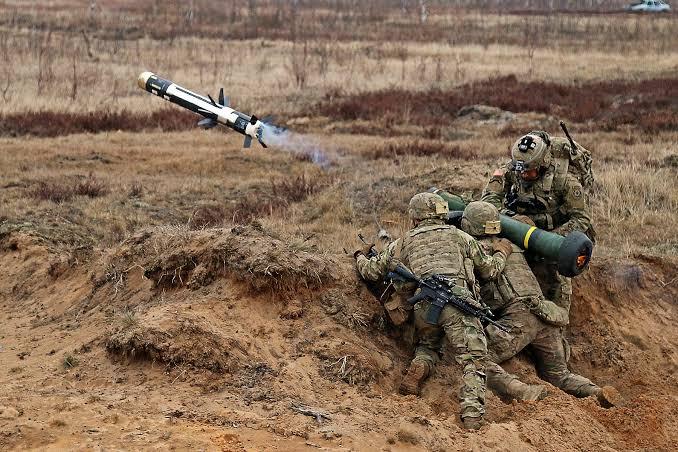
The Javelin’s key advantage is its fire-and-forget guidance system. Its imaging infrared seeker locks onto a target before launch, allowing the operator to fire the missile and immediately move away from the firing position.
This is different from older anti-tank systems such as the Milan-2T and Konkurs-M currently used by the Army, which are wire-guided and require operators to remain exposed while guiding the missile toward its target.
The Javelin can also use a top-attack mode, allowing it to strike the relatively weaker upper armour of a tank. Its tandem warhead is designed to counter explosive reactive armour used on armoured vehicles.
Another important feature is its soft-launch system, which allows the missile to be fired from enclosed positions such as bunkers or rooms. This can be particularly useful in mountainous and fortified environments.
The weapon has also gained international attention for its use during the war in Ukraine.
India’s Long Search for Javelin
India’s interest in the Javelin dates back to 2009, when Indian soldiers first fired the weapon during Exercise Yudh Abhyas at Babina.
In August 2010, then Defence Minister A.K. Antony told Parliament that India planned to approach the United States through the FMS route for a third-generation anti-tank missile along with technology transfer.
However, the proposal did not progress. A later US offer involving joint production in India in 2019 also failed to result in a completed programme.
India subsequently explored other options, including Israel’s Spike anti-tank missile.
Spike Programme and Earlier Trials
The Israeli Spike system was selected over the Javelin in 2014 for a proposed deal valued at around $500 million. The acquisition was cancelled in 2017 before being revived after Israeli Prime Minister Benjamin Netanyahu’s visit to India in 2018. The programme was later shelved again.
The Indian Army eventually obtained a limited number of Spike missiles under emergency procurement provisions in 2019.
In August 2023, the Defence Ministry awarded a contract worth approximately ₹287 crore to Kalyani Rafael Advanced Systems, a joint venture between Bharat Forge and Rafael, for Spike variants manufactured in Hyderabad.
The Javelin and Spike programmes have both faced challenges during Indian trials. Reports indicated that the Javelin encountered difficulties during high-altitude testing in Ladakh, while the Spike had previously faced problems during trials in the heat and dust of Rajasthan’s Thar desert.
Neither the Indian Army nor the manufacturers publicly provided detailed explanations of the reported trial outcomes.
India Develops Indigenous Anti-Tank Missile
Alongside foreign acquisitions, India has continued developing its own man-portable anti-tank guided missile capability.
The Defence Research and Development Organisation (DRDO) announced that it had successfully flight-tested the Man-Portable Anti-Tank Guided Missile in a top-attack configuration against a moving target at the KK Ranges in Maharashtra.
The indigenous missile has been described as ready for induction, with Bharat Dynamics Limited and Bharat Electronics Limited involved as production partners.
The Javelin purchase is therefore expected to complement rather than replace India’s efforts to develop and manufacture advanced anti-tank weapons domestically.
The limited emergency acquisition could provide the Army with an advanced fire-and-forget capability while the broader question of producing the Javelin in India continues to be discussed between New Delhi and Washington.
Tags
More Stories

Pakistan ISI’s Alleged India Spy Trap: Social Media, Honeytraps and ‘Nudity’ Used to Target Defence Personnel
28 Aug 2026

HDFC Bank May Appeal NCLT Approval of Subhash Chandra’s ₹6.25 Crore Personal Guarantor Repayment Plan
28 Aug 2026

JP Nadda Meets Quota-Reform Activists; Ajeet Bharti Calls It 'Negotiation Drama'
27 Aug 2026

2 Pilots From Gujarat, Karnataka Killed As Training Aircraft Crashes In Kanpur
27 Aug 2026