
Iceland Rejects Renewed EU Membership Talks as Arctic Divide Deepens
Icelanders have voted against restarting negotiations to join the European Union, with more than 52% rejecting the proposal. The referendum exposed a sharp rural-urban divide and highlighted concerns over fishing rights and Iceland’s sovereignty.
Iceland Rejects Renewed EU Membership Talks as Arctic Divide Deepens
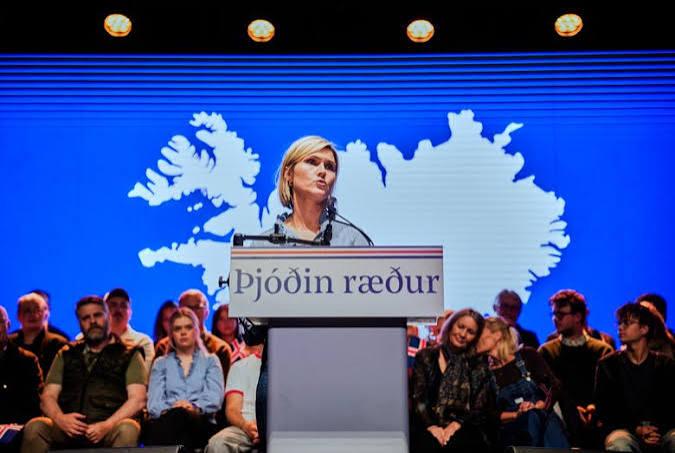
Reykjavik: Iceland has voted against restarting negotiations for European Union membership, with just over 52% of voters rejecting the proposal in a closely watched referendum.
The vote, held on August 29, attracted an unusually high turnout of more than 82%, underlining the importance of the issue for the North Atlantic nation. Around 47% backed restarting EU membership talks.
The result keeps Iceland outside the European Union and closes, at least for now, a potential path toward deeper European integration in the Arctic.
Rural-Urban Divide Shapes Result
The referendum revealed a significant political and geographical divide across Iceland.
While voters in Reykjavik and the capital region largely supported reopening negotiations, rural communities predominantly backed the "No" side. Similar rural-urban differences have appeared in other European debates, including the United Kingdom's 2016 Brexit referendum.
The referendum was included in the programme of the centre-left government led by Prime Minister Kristrún Frostadóttir. The vote had originally been expected later, but concerns about geopolitical developments in the Arctic contributed to bringing the decision forward.
Had the "Yes" campaign prevailed, Iceland would have resumed talks with Brussels. Negotiations could potentially have progressed faster than those of a first-time candidate because Iceland already participates in the European Economic Area and Schengen Area and has previously completed negotiations on several EU policy chapters.
Iceland was previously an EU candidate between 2009 and 2013, before withdrawing its application.
Fishing Rights Remain the Key Concern
One of the biggest obstacles to EU membership remains Iceland's fishing industry.
Fishing is a strategically important part of the country's economy, accounting for a significant share of exports and providing employment across many coastal communities.
Opponents of EU membership have long feared that joining the bloc could give fishing fleets from other EU countries greater access to Icelandic waters.
The issue was also particularly contentious during Iceland's previous membership negotiations. Fishing rights became the main area where negotiations failed to make progress.
For many voters outside the capital, protecting control over Iceland's fishing resources remains closely linked to national sovereignty.
Mixed Reaction Across Europe
The referendum result was welcomed by European Eurosceptic politicians.
Former British politician Nigel Farage praised Icelanders for protecting their independence, while French far-right leader Marine Le Pen described the outcome as evidence that a different model of European cooperation could exist without requiring countries to surrender sovereignty.
The response from Brussels was more cautious.
European Commission President Ursula von der Leyen and representatives of the European Council stressed that Iceland remains an important partner for the European Union despite the referendum result.
Icelandic Prime Minister Frostadóttir also indicated that the result would not disrupt the government's work. She described the referendum as a democratic decision and said reopening EU membership negotiations would not be considered, at least until the end of her current term in 2028.
Why Iceland Matters to Europe
The referendum carries significance beyond Iceland's domestic politics because of the country's strategic position in the Arctic.
Iceland sits between North America and Europe and occupies a strategically important location for maritime routes, security and access to the increasingly contested Arctic region.
The European Union has sought a stronger role in Arctic affairs, particularly on environmental protection, social policy and sustainable development.
Icelandic EU membership could also have strengthened Brussels' influence over emerging economic opportunities, including critical minerals, rare-earth resources and new shipping and logistics corridors.
As Arctic sea ice continues to decline, major powers including the United States, Russia and China are increasing their focus on the region.
For the EU, Iceland's decision therefore represents more than another membership setback. It leaves Brussels without the deeper political influence that Icelandic membership could have provided in a strategically important part of the world.
For Iceland, however, the referendum reflects a continuing preference among a majority of voters to preserve national control over key resources while maintaining close cooperation with Europe from outside the EU.
Tags
More Stories

Europe’s Gas Prices Surge Above €70 as Middle East Tensions Threaten LNG Supplies
31 Aug 2026

EU Research Fellowship Helps Ghanaian Scientist Turn Pineapple Fibre Prosthesis Idea Into Reality
31 Aug 2026
India Rejects Hague Court Ruling on Indus Waters Treaty, Says ‘No Jurisdiction’
31 Aug 2026
SCO Summit 2026 Begins in Bishkek: Modi-Putin, Modi-Xi Talks in Focus as Security and Trade Top Agenda
31 Aug 2026