
India Rejects Hague Court Ruling on Indus Waters Treaty, Says ‘No Jurisdiction’
India has rejected the Hague-based Permanent Court of Arbitration’s latest ruling on the Indus Waters Treaty, asserting that the court has no authority over India’s sovereign decisions. New Delhi said its decision to keep the treaty in abeyance remains unchanged.
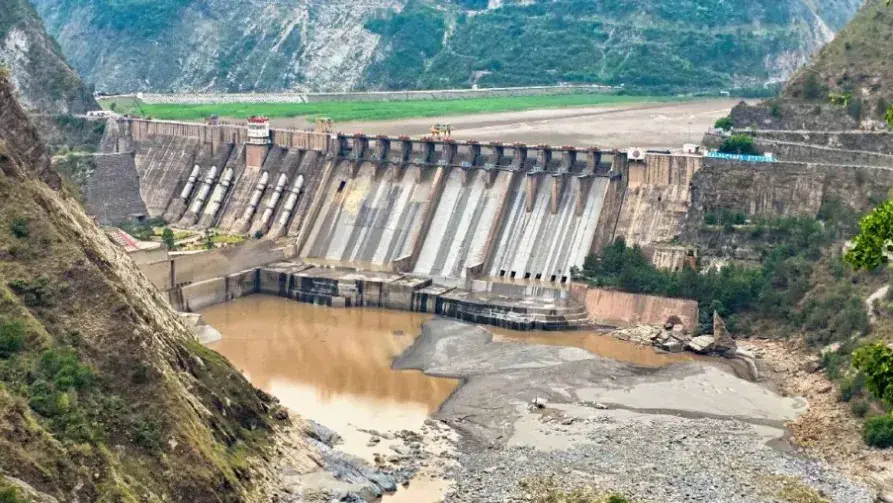
India Rejects Hague Court Ruling on Indus Waters Treaty, Says ‘No Jurisdiction’
New Delhi: India has firmly rejected a ruling by the Hague-based Permanent Court of Arbitration concerning the Indus Waters Treaty, maintaining that the tribunal has no jurisdiction over India’s sovereign decisions.
The development comes after India suspended the decades-old water-sharing agreement with Pakistan following the April 22 Pahalgam terror attack, which killed 26 people. New Delhi subsequently adopted a series of measures against Pakistan, including putting the Indus Waters Treaty in abeyance.
The Court of Arbitration has maintained that the treaty remains fully operational and said India had no basis under the agreement to suspend it. The tribunal was also asked to examine disputes linked to India’s Kishenganga and Ratle hydroelectric projects on the western rivers of the Indus system.
India, however, has rejected the tribunal’s authority from the outset.
The Ministry of External Affairs said the body was constituted in violation of the treaty’s provisions and described its proceedings as legally invalid from India’s perspective.
India has argued that disputes involving the design of the hydroelectric projects are technical in nature and should be addressed through the Neutral Expert mechanism provided under the Indus Waters Treaty. According to New Delhi, allowing a Court of Arbitration to examine the same issues alongside the Neutral Expert process undermines the dispute-resolution framework agreed upon by India and Pakistan.
The MEA reiterated that India has never recognised the legal existence of the tribunal and has refused to participate in its proceedings or acknowledge its previous pronouncements.
New Delhi also rejected the latest ruling, stressing that the tribunal has no authority to determine whether India can suspend the treaty.
India's position remains that the Indus Waters Treaty will stay in abeyance until Pakistan takes credible and irreversible steps against cross-border terrorism.
The Indus Waters Treaty was signed in September 1960 with the World Bank’s involvement to regulate the sharing of the Indus river system between India and Pakistan. Despite decades of tensions between the two countries, the agreement had remained a key framework for managing their shared water resources.
India has repeatedly stressed its position that “blood and water cannot flow together”, linking the future of the treaty to Pakistan’s response to terrorism emanating from its territory.
For now, New Delhi has made clear that the Hague tribunal’s latest pronouncement will not alter India’s position. The government maintains that its decision to keep the Indus Waters Treaty in abeyance remains in force.
Tags
More Stories

Europe’s Gas Prices Surge Above €70 as Middle East Tensions Threaten LNG Supplies
31 Aug 2026

EU Research Fellowship Helps Ghanaian Scientist Turn Pineapple Fibre Prosthesis Idea Into Reality
31 Aug 2026

Iceland Rejects Renewed EU Membership Talks as Arctic Divide Deepens
31 Aug 2026
SCO Summit 2026 Begins in Bishkek: Modi-Putin, Modi-Xi Talks in Focus as Security and Trade Top Agenda
31 Aug 2026