
Sonam Wangchuk Says CJP Leaders Wanted to End Protest After July 20 Crackdown
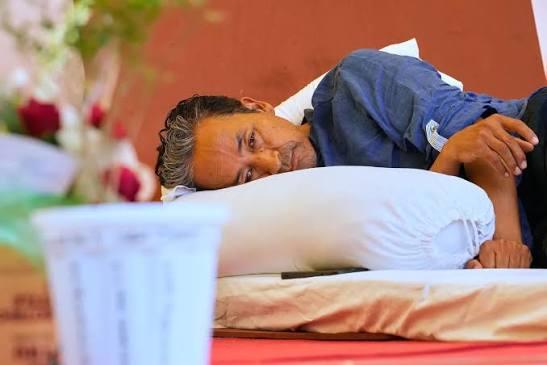
Activist Sonam Wangchuk has said leaders of the Cockroach Janta Party (CJP) were deeply demoralised after the July 20 police action at Delhi’s Jantar Mantar and briefly considered ending the protest.
Sonam Wangchuk Says CJP Leaders Wanted to End Protest After July 20 Crackdown
Activist Sonam Wangchuk has revealed that leaders of the Cockroach Janta Party (CJP) considered ending their protest following a police crackdown at Delhi’s Jantar Mantar on July 20.
Speaking on the PGX podcast with Prakhar Gupta, Wangchuk said the protest leadership had become deeply discouraged after the police action, during which the movement's stage was dismantled and several protesters left the site.
According to Wangchuk, CJP leaders approached him to help draft a message asking protesters to leave Jantar Mantar, return home and take a break.
CJP Leaders Felt the Protest Had Collapsed
Wangchuk recalled that the atmosphere among organisers was extremely low after the July 20 action.
He said the leadership believed that most of the protesters who had gathered at Jantar Mantar had left and that the movement might have effectively ended.
The organisers wanted Wangchuk to prepare a message suggesting that protesters return home and rest while the group considered its next steps.
Wangchuk said he drafted the proposed message, but it was ultimately not published.
Young Protesters Returned to Jantar Mantar
According to Wangchuk, the situation changed significantly the following day when young protesters began returning to the protest site.
Their return helped restore confidence among the organisers and convinced the leadership that the movement still had support.
Wangchuk praised the young protesters for coming back despite facing police action, saying their presence had a direct impact on the morale of the CJP leadership.
He explained that the organisers' confidence often depended on the number of people participating in the protest.
As more protesters returned, the leadership became more confident about continuing the agitation.
Organisers Considered Ways to End the Agitation
Wangchuk also spoke about discussions within the protest movement over how the agitation could potentially be brought to an end.
He said the organisers had considered seeking support from Opposition leaders to help end his hunger strike.
According to Wangchuk, one proposal involved approaching Congress leader Rahul Gandhi and asking him to intervene in Parliament. However, he said efforts to establish contact with Gandhi's side did not result in a positive response.
The government later established communication with Wangchuk through Intelligence Bureau officials.
On the night of July 21, Union ministers JP Nadda and Jitendra Singh met Wangchuk at the hospital and urged him to end his hunger strike.
Demands Included Accountability and Protection for Protesters
Wangchuk said he initially raised demands involving accountability, compensation and a parliamentary discussion aimed at finding long-term solutions.
Later, he identified protection for protesting students from FIRs and potential legal harassment as a key demand.
He said the issue was particularly important because protesters had already faced police action during the agitation.
CJP Continued the Protest
Despite the uncertainty following the July 20 crackdown, the CJP leadership ultimately decided to continue the agitation after protesters returned to Jantar Mantar.
Wangchuk said he was unaware while receiving treatment at the hospital that people were returning to the protest site.
The renewed mobilisation eventually gave the organisers enough confidence to continue their campaign.
After Wangchuk's hunger strike ended, the group continued pressing for accountability, including its demand for the resignation of Education Minister Dharmendra Pradhan.
Wangchuk said he supported the decision, arguing that a resignation would represent accountability even if it did not immediately transform the education system.
He described the overall outcome as a limited success, saying there had been some government response and accountability but that he had not seen evidence of a major transformation in education.
Tags
More Stories

Supreme Court Refuses Plea Seeking Ethanol Percentage Disclosure on Petrol Nozzles and Bills
31 Aug 2026
Bombay High Court Cancels Clerk Typing Test After Technical Glitches, Orders Fresh Exam
30 Aug 2026
Mumbai to Get Two More Ring Roads as MMRDA Plans 307-km Network of New Loops
30 Aug 2026
Penguin India Drops Sonia Gandhi Memoir After Dispute Over Proposed Changes and Deletions
30 Aug 2026